Unlocking the Future: Advancements in Aluminum Castings for Leading Industries
The realm of aluminum castings is changing, propelled by the pursuit of efficiency and sustainability. Industries are increasingly recognizing the advantages of aluminum's lightweight and corrosion-resistant properties. Innovative techniques, such as automation and AI, are reshaping production processes. Yet, substantial hurdles continue to exist. As the demand for sustainable solutions grows, the future of aluminum casting poses intriguing questions about its role in modern manufacturing. What lies ahead for this essential material?
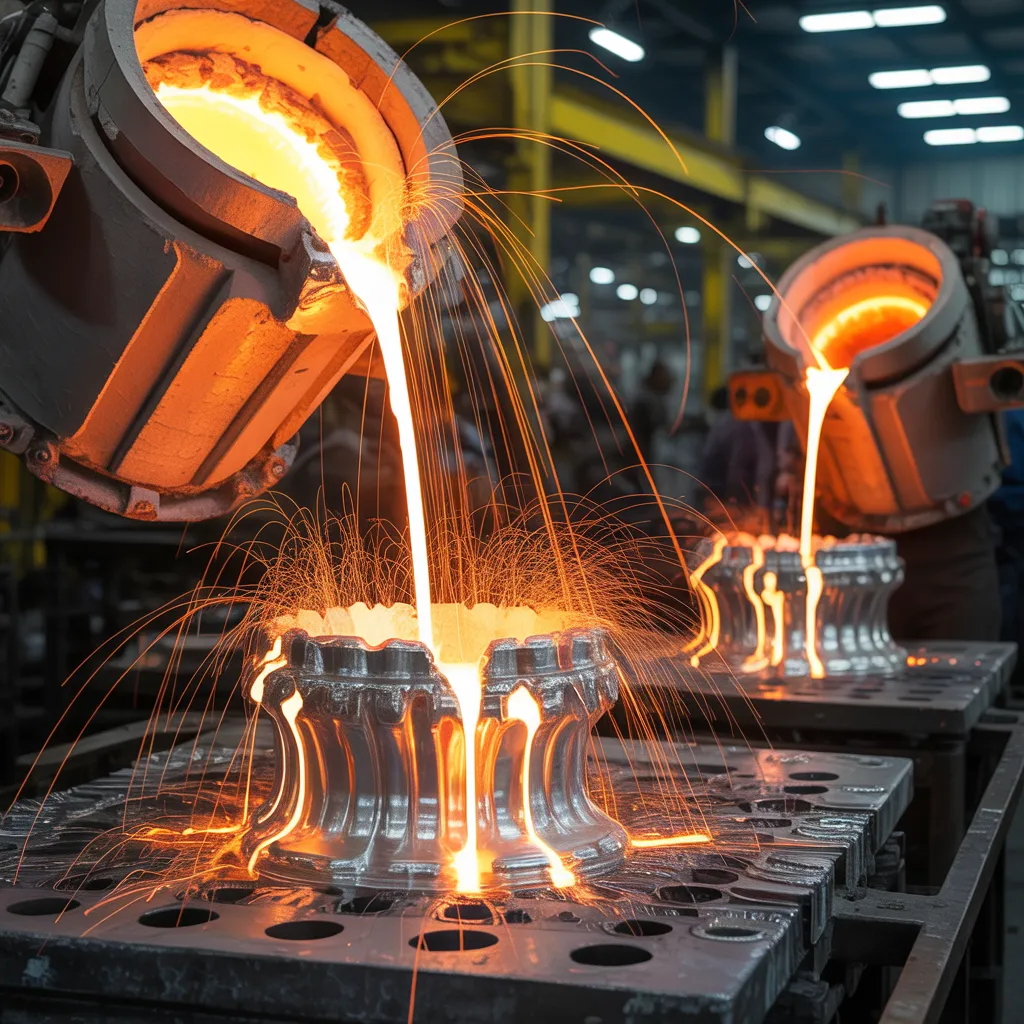
The Emergence of Aluminum Castings in Contemporary Manufacturing
As industries increasingly seek high-performance and lightweight materials, aluminum castings have established themselves as a vital option in today's manufacturing landscape. Their versatility and strength make them ideal for various applications across sectors such as automotive, aerospace, and consumer goods. The low weight characteristics of aluminum promote greater fuel efficiency and decreased emissions, especially within the transportation industry. Furthermore, aluminum castings provide outstanding corrosion resistance, enhancing the durability of components in challenging environments.
The ability to create sophisticated designs with exactness greatly enhances their attractiveness, permitting manufacturers to develop complex components that meet specific performance requirements. Additionally, the reusability of aluminum supports eco-friendly production methods, supporting international ecological targets. As a result, the adoption of aluminum castings is steadily rising, positioning them as a cornerstone of innovation in manufacturing processes. This trend reflects a broader commitment to embracing substances that improve efficiency while reducing environmental effects.
Advanced Methods Enhancing Efficiency in Aluminum Casting
Revolutionary approaches are reshaping aluminum casting workflows, greatly boosting efficiency and precision. Modern technologies, such as computer-aided design (CAD) and predictive modeling, allow industry professionals to improve mold designs and anticipate potential defects ahead of manufacturing. This proactive approach minimizes waste and eliminates costly reworks.
The integration of automated equipment continues to streamline operations, allowing for faster cycle times and consistent quality. Processes including die casting and sand casting have progressed, integrating real-time monitoring systems that track temperature and pressure, ensuring ideal conditions throughout the process.
Furthermore, the implementation of weight-optimized materials and advanced cooling approaches increases rates of solidification, enhancing manufacturing efficiency. These improvements not only enhance overall output but also strengthen the dimensional accuracy of manufactured components.
Advancing Sustainability With Aluminum Castings
While the aluminum casting industry has made notable strides in efficiency, improving sustainability has emerged as a critical priority. The growing need for eco-friendly operations has encouraged manufacturers to utilize recycled aluminum as a core material. Employing scrap aluminum not only cuts energy demands but also curtails waste, considerably diminishing the carbon footprint tied to the production process.
In addition, improvements in casting techniques, such as sand casting and die casting, have improved material usage, substantially contributing to eco-friendly practices. These technological improvements establish that less material is wasted during the casting process, supporting a waste-reducing economy. Moreover, environmentally safe coatings and lubricants are being adopted to reduce harmful emissions and increase the lifespan of cast components.
As the industry continues to evolve, the incorporation of environmentally responsible approaches in aluminum casting is anticipated to serve a critical function in adhering to industry regulations and addressing market expectations for more sustainable goods. This commitment to sustainability establishes aluminum castings as a compelling choice for today's evolving industrial applications.
What Are the Uses of Aluminum Castings in Aerospace and Automotive?
The applications of aluminum castings in the aerospace and automotive industries highlight the exceptional versatility and superior performance of this material. In aerospace, aluminum castings are integral to the construction of critical components such as engine housings, structural frames, and brackets. The lightweight properties of these castings enhance fuel efficiency and boost overall aircraft performance. Furthermore, the corrosion-resistant properties of aluminum extend the lifespan of these components in challenging environments.
In the automotive sector, aluminum castings are more commonly employed in suspension components, engine blocks, and transmission housings. These castings not only reduce vehicle weight but also support enhanced fuel economy and decreased emissions. Moreover, the ability to create complex shapes and designs permits cutting-edge engineering solutions, improving both performance and safety. Together, these uses highlight aluminum's significance as an essential material in promoting innovation and sustainability throughout both industries.
How Is Advanced Technology Reshaping the Aluminum Casting Industry?
How are advanced technologies reshaping the landscape of aluminum casting? Breakthroughs including 3D printing, computer-aided design (CAD), and artificial intelligence (AI) are transforming the sector. 3D printing supports rapid prototyping, giving designers the ability to craft sophisticated geometries that were formerly out of reach. This technology minimizes material waste and accelerates the design process considerably.
Furthermore, CAD software enhances precision in mold design, making certain that castings comply with rigorous standards. AI algorithms optimize production schedules and reduce defects by predicting potential issues before they arise. Furthermore, progress in alloy engineering, including high-strength aluminum alloys, enhances the performance of cast parts, making them more suitable for demanding applications.
These technologies collectively boost efficiency, lower costs, and elevate quality in aluminum casting, allowing the industry to fulfill the evolving demands of sectors like the aerospace and automotive industries. As these advancements continue, they promise to reveal new opportunities for innovation and manufacturing.
Navigating Challenges in Aluminum Casting Production
In the domain of aluminum casting production, numerous challenges remain that require strategic solutions. Standards for quality assurance, progress in casting techniques, and material supply difficulties substantially shape productivity and output consistency. Tackling these challenges is imperative for manufacturers aiming to enhance their production efficiency and respond to consumer needs.
Quality Assurance Measures
Effective quality control measures are essential for overcoming the inherent challenges in aluminum casting production. To ensure superior results, producers apply strict inspection procedures across the entire casting process. Methods including X-ray inspection, ultrasonic testing, and visual checks enable early detection of flaws such as porosity and inclusions. Statistical process control (copyright) is utilized to track production parameters, enabling prompt corrections that reduce inconsistencies. Additionally, adherence to industry standards and certifications enhances reliability and consistency. Instructing team members in optimal practices builds a culture centered on quality, underscoring the value of each phase within the production cycle. By incorporating these approaches, fabricators can considerably decrease waste, elevate product performance, and fulfill the demanding expectations of today's industries.
Cutting-Edge Casting Technologies
Transforming the aluminum casting industry, cutting-edge technologies tackle the persistent challenges faced by manufacturers. Advancements including 3D printing and digital simulation continue to streamline the design and prototyping processes, allowing for quicker modifications and shorter lead times. Automated solutions boost precision and consistency, minimizing human error and improving the quality of finished products. Additionally, progress in alloy engineering enable the creation of strong yet lightweight castings that satisfy varied industrial requirements. Methods such as vacuum casting and pressure die casting further optimize material flow and minimize defects. Such innovations improve both operational efficiency and environmental sustainability by reducing waste and energy consumption. As the industry embraces these advancements, the future of aluminum casting looks promising, with increased versatility and better performance throughout numerous applications.
Material Acquisition Challenges
Cutting-edge innovations in aluminum casting have significantly enhanced production efficiency, yet material sourcing remains a persistent challenge for manufacturers. The growing demand for superior aluminum alloys often leads to supply chain disruptions, driven by volatile commodity costs and international tensions. Manufacturers face difficulties in securing dependable vendors, which can affect manufacturing schedules and expenses. Additionally, the increasing focus on sustainability necessitates sourcing recycled materials, making acquisition procedures more challenging. To tackle these issues, companies are developing strategic collaborations, strengthening regional sourcing networks, and implementing sophisticated stock control methods. By fostering collaboration and harnessing digital innovations, manufacturers seek to minimize procurement vulnerabilities, ensuring a consistent supply of materials critical to fulfilling the developing requirements of contemporary manufacturing sectors.
Future Trends Shaping the Aluminum Casting Industry
The aluminum casting field is on the verge of substantial evolution fueled by cutting-edge manufacturing methods, eco-friendly material alternatives, and intelligent automation adoption. These advancements stand not only to improve manufacturing productivity but also to lower environmental consequences. As organizations integrate these developments, the landscape of aluminum casting is set for a profound change.
Innovative Manufacturing Strategies
New and emerging technologies are transforming the field of aluminum casting, opening doors to enhanced efficiency and precision. Advanced manufacturing techniques, such as CNC machining and additive manufacturing processes, are becoming increasingly prevalent. These approaches facilitate intricate designs and rapid prototyping, significantly cutting lead times. Furthermore, the integration of automation and robotics enhances production efficiency, limiting human error while improving resource allocation. The design phase is greatly enhanced by finite element analysis (FEA), verifying that components fulfill strict performance requirements before production begins. As these advancements progress, they promise to revolutionize the aluminum casting industry, allowing producers to create stronger, lighter, and more intricate components that address the needs of modern uses across diverse sectors.
Green Material Solutions
As innovations in manufacturing techniques reshape the aluminum casting landscape, an increasing focus on sustainability is becoming a defining trend. Businesses are progressively adopting environmentally responsible methods, including the use of reclaimed aluminum, which considerably cuts down on energy demands and waste generation. This shift not only lowers carbon footprints but also aligns with global sustainability goals. Additionally, advancements in bio-based binders and coatings are being explored to minimize harmful emissions during the casting process. Organizations are utilizing life cycle analyses to assess the environmental consequences of their materials, ensuring that sustainable choices are made from inception to production. As public interest in environmentally friendly products increases, the aluminum casting sector is prepared to adopt these eco-friendly material innovations, fostering creativity and conscientious production methods.
Smart Automation Integration
Integrating smart automation into the aluminum casting process revolutionizes efficiency and precision. Cutting-edge technologies, including robotics and artificial intelligence, enhance operations by refining production schedules and minimizing human error. Automated systems track parameters in real-time, guaranteeing consistent quality and reducing waste. These innovations enable manufacturers to respond swiftly to market demands, enhancing flexibility in production lines. Furthermore, machine learning algorithms examine historical data to anticipate maintenance needs, consequently decreasing downtime and operational costs. As smart automation evolves, it positions the aluminum casting industry to attain elevated standards of productivity and sustainability. This evolution positions companies to remain competitive in a rapidly changing market, ultimately revealing new potentials for growth and innovation.
Common Questions and Answers
What Cost Factors Are Involved in Aluminum Casting?
Cost factors related to aluminum casting encompass raw material expenditures, workforce costs, energy consumption, tooling costs, and the complexity of designs. Additionally, economies of scale and output levels significantly impact total cost and profit margins.
How Does Aluminum Casting Compare to Other Materials?
Aluminum casting offers advantages over other materials, including a lighter overall weight, resistance to corrosion, and improved thermal conductivity. Nevertheless, it tends to carry a higher cost and not as strong as materials such as steel or select composite alternatives in certain applications.
What Safety Protocols Are Essential in Aluminum Casting?
Safety practices in aluminum casting include adequate ventilation, personal safety gear, consistent equipment servicing, and adherence to industry standards. Moreover, establishing training programs for workers improves awareness of potential hazards and promotes a safer working environment.
Are Aluminum Castings Able to Be Recycled Effectively?
Aluminum castings can be effectively recycled, as the material preserves its qualities through the recycling cycle. This makes recycling a sustainable option, minimizing waste and saving energy in contrast to creating new aluminum from virgin raw materials.
What Certifications Are Relevant for Aluminum Casting Manufacturers?
Important certifications for aluminum casting manufacturers consist of ISO 9001 which covers quality management, ISO 14001 for environmental management, along with AS9100 for aerospace standards. Such certifications confirm conformity to industry benchmarks and access now advance product reliability and environmental responsibility.